

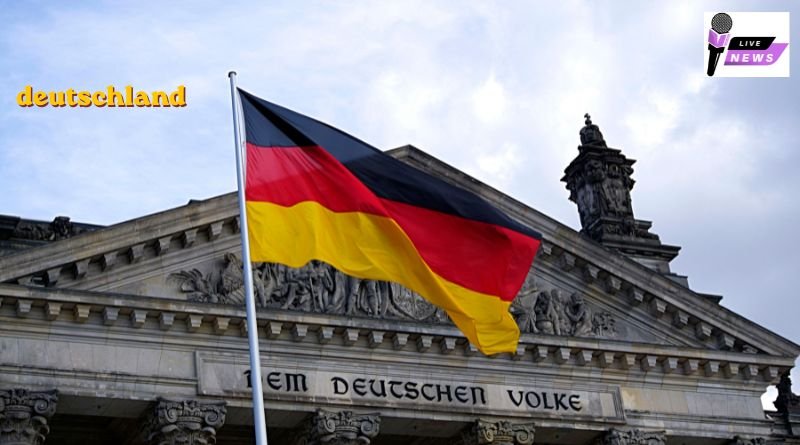
Few countries in the world carry the weight of history, the force of economic power, and the richness of cultural tradition quite like Deutschland. Known to the English-speaking world as Germany, Deutschland sits at the heart of Europe — geographically, politically, and culturally. From the towering spires of medieval cathedrals to the steel-and-glass skylines of Frankfurt and Berlin, this nation is a living conversation between the ancient and the modern. To understand Deutschland is to understand a great deal about how the world became what it is today.
A History Shaped by Centuries of Change
The story of Deutschland stretches back more than two thousand years, from the Germanic tribes who resisted Roman expansion along the Rhine to the formation of the Holy Roman Empire, the upheaval of the Protestant Reformation, and the devastating conflicts of the twentieth century. Each era left a deep imprint on the national identity. The division of the country after World War II — into East and West Germany — and the eventual reunification in 1990 remains one of the most powerful political events in modern European history. That reunion did not just redraw borders; it reunited families, economies, and a shared sense of what it means to belong to Deutschland. Today, the memory of those divided decades continues to shape how Germans approach democracy, freedom of speech, and the responsibilities of statehood.
An Economic Powerhouse at Europe’s Core
Deutschland is widely regarded as the economic engine of the European Union. Its industrial strength — particularly in the automotive, engineering, pharmaceutical, and chemical sectors — has earned it a reputation for precision and reliability that resonates across global markets. Brands such as Mercedes-Benz, Siemens, and BASF are not merely corporate names; they are symbols of a national culture that places immense value on craftsmanship, technical education, and long-term planning. The German concept of the Mittelstand — a vast network of small and medium-sized family businesses — forms the quiet backbone of this economic success, often going unnoticed yet driving exports and employment in ways that larger corporations cannot replicate. Deutschland’s commitment to vocational training has become a model that other nations increasingly seek to imitate, recognizing that economic resilience depends on a skilled and adaptable workforce.
Culture, Language, and the German Way of Life
Beyond economics and politics, the cultural life of Deutschland is extraordinarily rich. The country gave the world Beethoven, Goethe, Kant, and Einstein — figures whose contributions to music, literature, philosophy, and science continue to define entire fields of human thought. German cities are home to world-class museums, opera houses, and galleries, while the country’s festivals — from the internationally beloved Oktoberfest in Munich to the enchanting Christmas markets that appear each winter across hundreds of towns — draw millions of visitors every year. The German language itself, spoken by over 90 million people as a first language across Europe, carries a particular precision and expressive depth that has made it a vital language of academia and cultural exchange for centuries.
Nature, Landscape, and Environmental Leadership
The landscape of Deutschland is as varied as its history. The snow-dusted peaks of the Bavarian Alps give way to the sweeping plains of the north, while the romantic Rhine Valley, dotted with medieval castles and vineyard terraces, remains one of Europe’s most photographed regions. Germans have long held a deep connection to nature — the concept of Waldeinsamkeit, the solitary peace found in a forest, reflects something genuine about the national character. This relationship with the natural world also informs the country’s environmental ambitions. Deutschland has pursued one of the world’s most ambitious energy transitions, known as the Energiewende, aiming to shift its entire power supply toward renewable sources. Though this path has faced challenges, the commitment itself speaks to a broader national willingness to take long-term responsibility seriously.
A Nation Always Looking Forward
What makes Deutschland remarkable is not just what it has been, but what it continues to become. It remains a country grappling honestly with its past while building actively toward a future defined by innovation, inclusion, and international partnership. Whether through its leadership in the European Union, its growing technology sector, or the quiet hospitality found in a small-town Gasthof, Deutschland offers a depth of experience that rewards those willing to look beneath the surface. It is a nation that has earned its complexity — and continues, generation by generation, to define itself anew.